
Leda and the Swan
By: William Butler Yeats
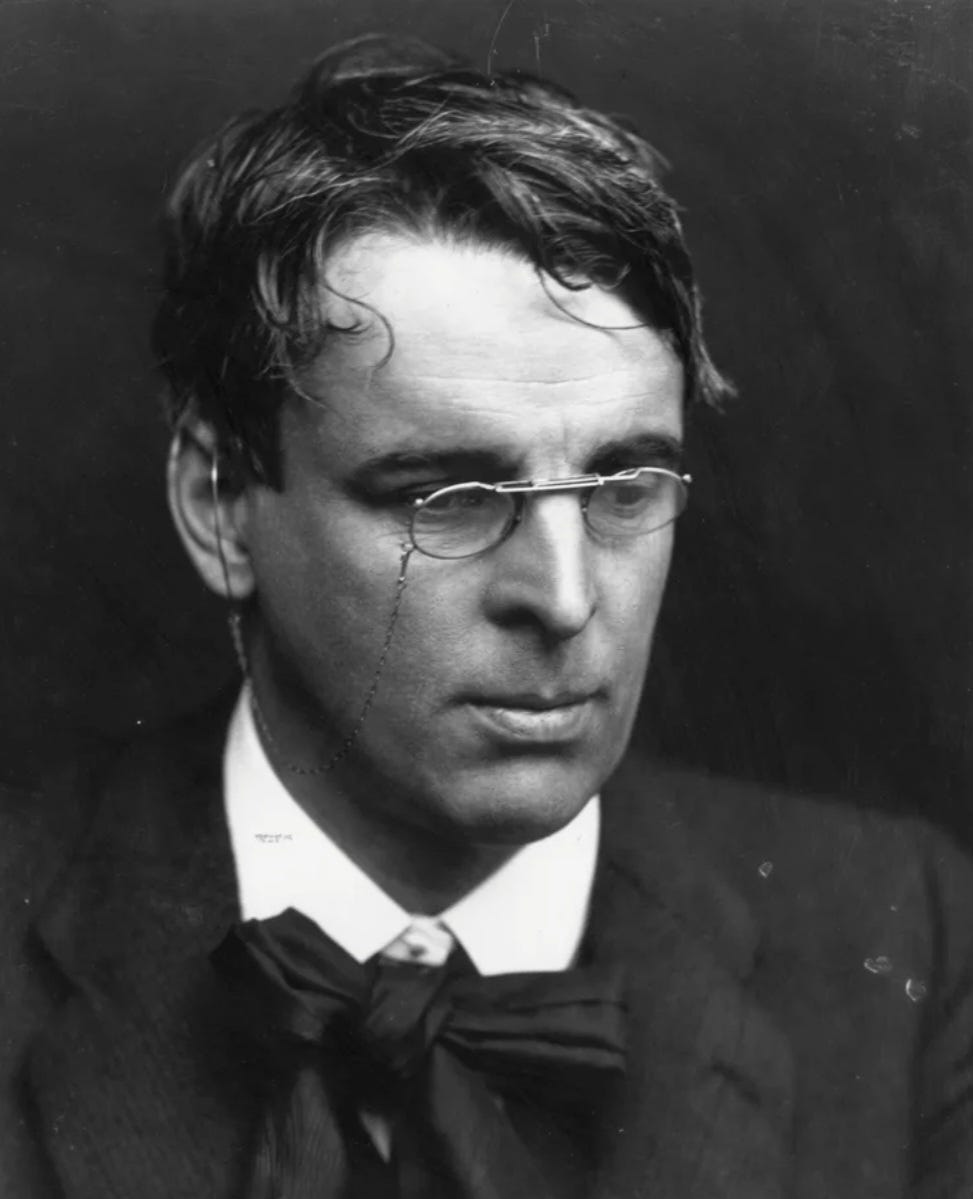
The best lack all conviction, while the worst are full of passionate intensity.
// W.B. Yeats
There are layers of mysticism to the work of William Butler Yeats. His poems simmer with other worlds, secrets buried under words, formed out of his need to understand what lies beyond the veil of reality. One with any sort of occult knowledge, even passing, can grasp hints of such in many of his works.
Leda and the Swan is different to Yeats’ mystical poetry, yet by far one of his most disturbing. Camille Paglia claimed in her book of essays on poetry, Break, Blow, Burn, that Yeats’ Leda and the Swan can be considered the greatest poem of the twentieth century. Stating it is about the tragedy of history.
Quite frankly, Paglia knows what she’s talking about when it comes to poetry, so it’s not a claim I’ll take lightly. Time and history happens to be another obsession of Yeats. A poem inspired by a tale of Greek Mythology, in just a few short lines, the poem details the disturbing fate of the woman, Leda, to the designs of Zeus shapeshifted into a swan and goes on to hint of what’s to come with the birth of her children through this event. For the Illiad, the Odyssey, and a dozen other tales and stories, Leda and the Swan can, in a way, be considered the first chapter leading to all of this. Another drop of ambiguity to the poem, at least from what I catch, is the feeling of Leda being used as a tool for what’s to come in the last line of her being dropped from Zeus’ beak - a tool, no longer needed.
Perhaps this short poem and the details discussed by myself and others can make you come up with your own conclusions on the meaning of this mysterious, visceral poem.
Enjoy.
Leda and the Swan
A sudden blow: the great wings beating still
Above the staggering girl, her thighs caressed
By the dark webs, her nape caught in his bill,
He holds her helpless breast upon his breast.
How can those terrified vague fingers push
The feathered glory from her loosening thighs?
And how can body, laid in that white rush,
But feel the strange heart beating where it lies?
A shudder in the loins engenders there
The broken wall, the burning roof and tower
And Agamemnon dead.
Being so caught up,
So mastered by the brute blood of the air,
Did she put on his knowledge with his power
Before the indifferent beak could let her drop?
This poem was discovered in Camille Paglia’s book: Break, Blow, Burn. An excellent collection of essay’s exploring a handful of poems throughout history which you can find here.